.svg)


Are You Training for Your Current Team or for College Soccer? How to Close the Gap Before You Arrive
You are one of the fastest players on your club team.
You win most of your 1v1s. You have time on the ball. You can recover from mistakes because you are stronger or quicker than the player across from you.
Right now, those qualities may help you dominate.
But here is a question every high school and club soccer player hoping to play college soccer in the United States should ask:
Will the things that make me successful today still make me successful at the next level?
That question matters because college soccer changes the environment around you.
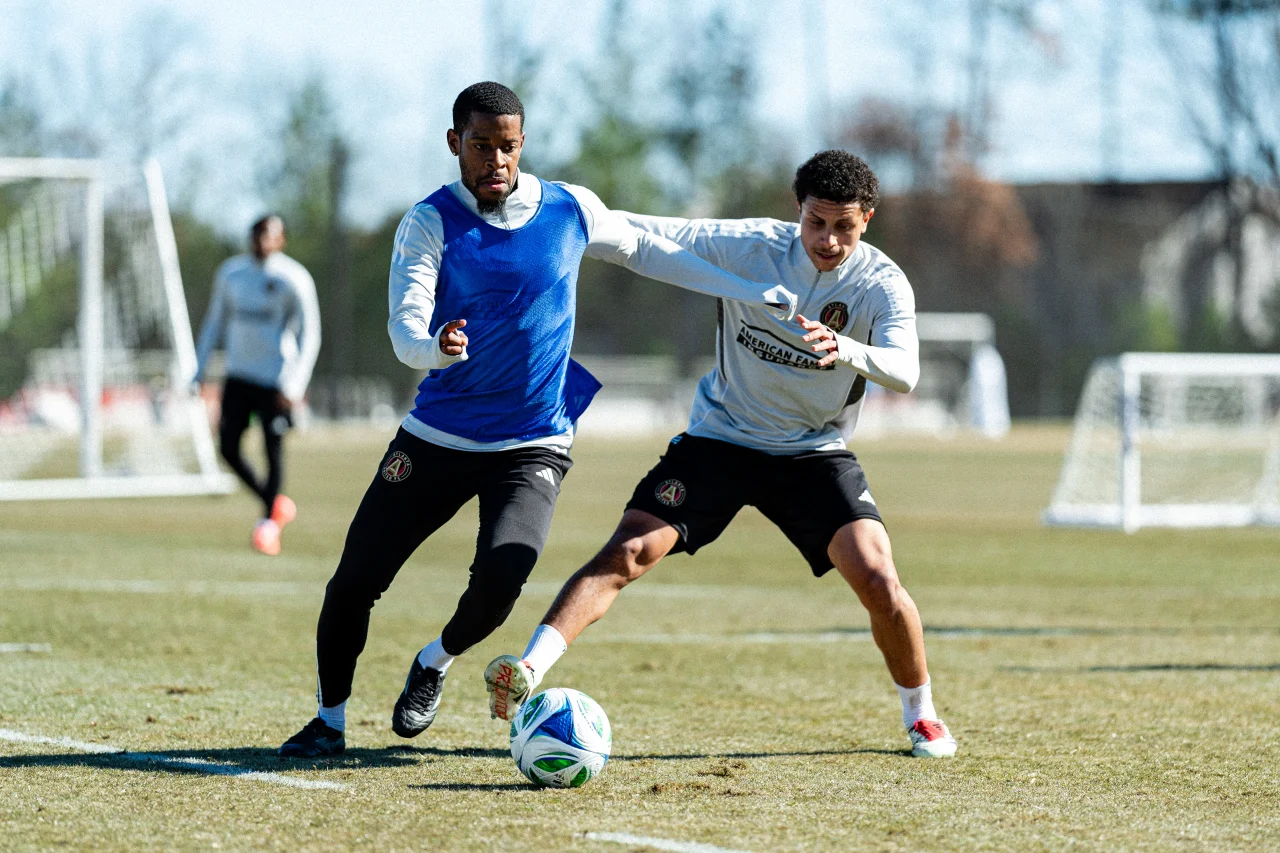
The defender you used to beat with speed may be just as fast as you.
The midfielder who gave you three seconds to turn may now give you one.
The forward you could push off the ball may be stronger than you.
And suddenly, the advantage you relied on for years is no longer enough.
Preparing for college soccer is not just about becoming better at your current level. It is about developing a game that can survive when the level around you rises.
Don’t only train to dominate the level you’re at. Train to handle the level you’re trying to reach.
Success Right Now Does Not Automatically Mean College Readiness
Playing well in high school or club soccer is important.
College coaches want to see players who can perform, compete, and influence games.
But current success and future readiness are not exactly the same thing.
Imagine a winger who is significantly faster than almost every outside back in their league.
Their solution is simple: push the ball forward and run.
It works.
Again and again.
But what happens when that winger arrives in college soccer and the outside back is equally fast?
Now the winger needs another solution.
Can they combine with a teammate?
Can they receive under pressure?
Can they attack inside?
Can they create separation with their first touch?
Can they recognize when not to dribble?
The same applies to every position.
A physically dominant center back may eventually face forwards who are just as strong.
A midfielder who has plenty of space in club soccer may suddenly have to make decisions much faster.
A striker who scores because they are quicker than everyone may need to improve movement, hold-up play, finishing under pressure, and combinations.
Your current strengths matter.
The goal is to make sure they are not hiding weaknesses you will need later.
The College Soccer Game Gives You Less Time
One of the biggest adjustments players face when moving toward college soccer is not simply running faster.
It is thinking faster.
Select Generation's guide to the biggest difference between youth soccer and college soccer explains how natural talent and athleticism can create separation at the youth level, while the college environment demands greater consistency, tactical understanding, and reliability. Select Generation
At a higher level, pressure arrives earlier.
Passing lanes disappear faster.
Transitions happen quickly.
Players recognize situations sooner.
That means your technical ability has to work at a higher speed too.
A beautiful first touch with no pressure is useful.
A clean first touch that takes you away from pressure is much more valuable.
A player who can complete a pass when they have five seconds is useful.
A player who already knows where the next pass is going before receiving the ball is better prepared for college soccer.
That is why preparation should include more than fitness.
You need to train your brain and your technique to operate with less time.
Ask Yourself: Why Am I Successful?
This is one of the most useful exercises a college soccer recruit can do.
Think about your best qualities.
Maybe you are:
- Fast
- Strong
- Technical
- Creative
- Aggressive defensively
- Excellent in the air
- A great passer
- A strong 1v1 player
- A natural goal scorer
Now go one step further.
Why does that strength work?
If you are successful in 1v1 situations, is it because you have multiple ways to beat a defender?
Or are you simply faster?
If you dominate aerial balls, is your timing excellent?
Or are you currently taller than everyone else?
If you control the midfield, is it because you scan, position yourself well, and make quick decisions?
Or because your opponents give you a lot of space?
There is nothing wrong with using physical advantages. If you are fast, use your speed. If you are strong, use your strength.
The mistake is allowing one advantage to stop you from developing the rest of your game.
Train What Happens When Your Best Weapon Is Taken Away
Here is a simple way to think about development:
What would happen if an opponent took away your biggest strength?
If you are a winger and cannot win with speed, what is Plan B?
If you are a midfielder and cannot turn, can you play quickly in one or two touches?
If you are a striker and the center back is stronger than you, can your movement create separation?
If you are a center back and cannot win every duel physically, can your positioning prevent the duel from happening?
If you are a goalkeeper and cannot rely on shot-stopping alone, how well can you organize, distribute, and control your box?
This type of thinking can expose areas that normal training does not.
Do not wait until college soccer exposes the weakness for you.
Find it now.
Your First Touch Has to Prepare Your Next Action
Players often practice technical skills in isolation.
There is value in repetition, but college soccer requires technique connected to decisions.
Your first touch should do something.
It might:
- Take you away from pressure
- Open a passing lane
- Move you toward goal
- Allow you to play forward
- Set up a pass with your next touch
If your first touch constantly leaves the ball underneath you, you will need extra time.
At your current level, you might have that time.
In college, you may not.
This is why college soccer coaches pay close attention to how players perform under pressure. Select Generation's breakdown of what college soccer coaches look for in recruits highlights ball control under pressure, tactical understanding, athletic ability, and decision-making as important parts of a player's overall evaluation. Select Generation
Do not only ask whether your technique looks good.
Ask whether it works quickly.
Learn to Play Faster Without Always Moving Faster
There is a major difference between playing fast and running fast.
You can increase the speed of a game without sprinting.
Scanning before receiving can make you faster.
Playing one touch can make you faster.
Positioning your body correctly can make you faster.
Recognizing the next pass early can make you faster.
Moving into the right space before the ball arrives can make you faster.
College soccer coaches can notice these details because they reveal whether a player can process the game.
This is especially important if you are not the fastest or strongest player physically.
Soccer IQ can buy you time.
If you recognize what is happening earlier, you do not always need to be the fastest athlete to arrive at the right solution.
Develop Your Weaker Foot Before You Need It
Your weaker foot is another area that can be easy to avoid when your current environment allows it.
Maybe you always receive on your preferred side.
Maybe you consistently turn toward the same foot.
Maybe opponents have not learned how to force you in the opposite direction.
At a higher level, players and coaches notice patterns.
If defenders know you always need to come onto your right foot, they can make the game smaller for you.
You do not need both feet to be identical.
But your weaker foot should be functional enough that opponents cannot completely control your options.
Can you make a short pass?
Can you receive cleanly?
Can you clear the ball under pressure?
Can you finish a simple opportunity?
Can you use that foot when the game demands it?
Becoming less predictable can make your existing strengths even more effective.
Study College Soccer Through Your Position
Watching college soccer can become part of your training.
But do not watch only as a fan.
Pick a player in your position and follow them.
If you are a defensive midfielder, watch what they do when their team has possession.
Where do they stand?
How often do they scan?
What happens immediately after possession is lost?
When do they play forward?
When do they play simple?
If you are a winger, watch when they stay wide and when they move inside.
If you are a center back, study their positioning before the ball reaches the striker.
If you are a forward, watch their movement when they are not going to receive the ball.
The goal is not to copy another player's style.
It is to understand what your position demands when the speed and physicality increase.
Ask Your Coach a Better Question
Players often ask coaches:
“What do I need to improve?”
That is a good question.
But try making it more specific:
“What part of my game do you think will be hardest for me when I move to college soccer?”
That question changes the conversation.
Your club or high school coach sees you regularly. They know what you do well and may recognize which weaknesses are currently being protected by your strengths.
Maybe they tell you:
“You need to release the ball faster.”
“You rely too much on your speed.”
“You need to communicate more.”
“You avoid your left foot.”
“You need to scan before receiving.”
“You lose your positioning when you attack.”
That feedback may be more valuable than hearing what you already do well.
Then turn it into a development goal.
Train Weaknesses Without Losing Your Identity
Preparing for college does not mean trying to become a completely different player.
If your speed is special, keep developing it.
If your creativity separates you, protect it.
If you are an aggressive defender, do not suddenly try to become a completely different profile because you think that is what college coaches want.
College programs recruit different types of players because they have different roster needs and playing styles. Understanding how college soccer coaches build recruiting classes and where different players fit can help you see why being clear about your strengths matters during recruiting. Select Generation
The goal is not to remove your identity.
It is to make your identity harder to stop.
A fast winger with strong decision-making is more dangerous than a fast winger with only speed.
A physical center back with excellent positioning is more complete than one who depends only on strength.
A creative midfielder who can also play quickly under pressure has more solutions.
Keep your weapon.
Build more around it.
Make Training Uncomfortable on Purpose
If every training session feels easy, you may only be practicing what you already know.
Development often happens when conditions force you to solve new problems.
You can challenge yourself by:
- Playing in tighter spaces
- Reducing the number of touches
- Receiving with pressure behind you
- Training your weaker foot
- Making decisions before receiving
- Playing against older or stronger players when appropriate
- Practicing at game speed
- Adding pressure to technical exercises
The point is not to make every drill complicated.
The point is to remove the comfort that allows your weaknesses to stay hidden.
College soccer will eventually do that for you.
Preparing early gives you time to adapt.
Do Not Wait Until You Commit
Some players think serious college preparation begins after they receive an offer or commit to a program.
It should begin much earlier.
Even while you are being recruited, coaches are trying to understand whether your game can translate to their level.
They are not evaluating statistics alone. When coaches watch recruits, they may also look at decision-making, positioning, communication, work rate, tactical understanding, and performance under pressure. Select Generation explains these details in its guide to how college soccer coaches evaluate players on game day. Select Generation
That means becoming more college-ready can also make you a stronger recruit.
The two goals are connected.
Build Your Own College-Ready Development Plan
You do not need a complicated spreadsheet or a completely new training program.
Start with three categories:
1. Keep Building Your Biggest Strength
Identify what separates you.
Do not neglect it just because you are working on weaknesses.
2. Identify One Weakness That May Be Exposed at the Next Level
Be specific.
“Get better technically” is too broad.
“Improve receiving on my back foot under pressure” gives you something you can actually train.
3. Develop One Skill That Helps You Play Faster
This could be:
- Scanning
- Body positioning
- One-touch passing
- Decision-making
- Communication
- Movement before receiving
Then track your progress.
After several weeks, ask whether the improvement is showing up in actual games.
Training only matters if the skill transfers when the game becomes difficult.
Final Thoughts: Prepare for the Player You Need to Become
There is nothing wrong with wanting to dominate your current level.
Compete.
Win.
Score.
Defend.
Create.
Enjoy being successful.
But do not allow success today to make you comfortable about tomorrow.
If your goal is college soccer in the United States, part of your development should always be aimed at the environment you are trying to enter.
Ask yourself:
What happens when everyone is faster?
What happens when everyone is stronger?
What happens when I have less time?
What happens when my biggest advantage is no longer unusual?
Those questions are not reasons to doubt yourself.
They are a training plan.
The earlier you identify the gap between your current game and the college game, the more time you have to close it.
So keep developing what makes you dangerous today.
But also build the skills you will need tomorrow.
Because your goal is not simply to arrive at college soccer.
Your goal is to arrive ready for it.